 |
IPCOS
lab:
Integer Programming,
Combinatorial
Optimization
and Structures |
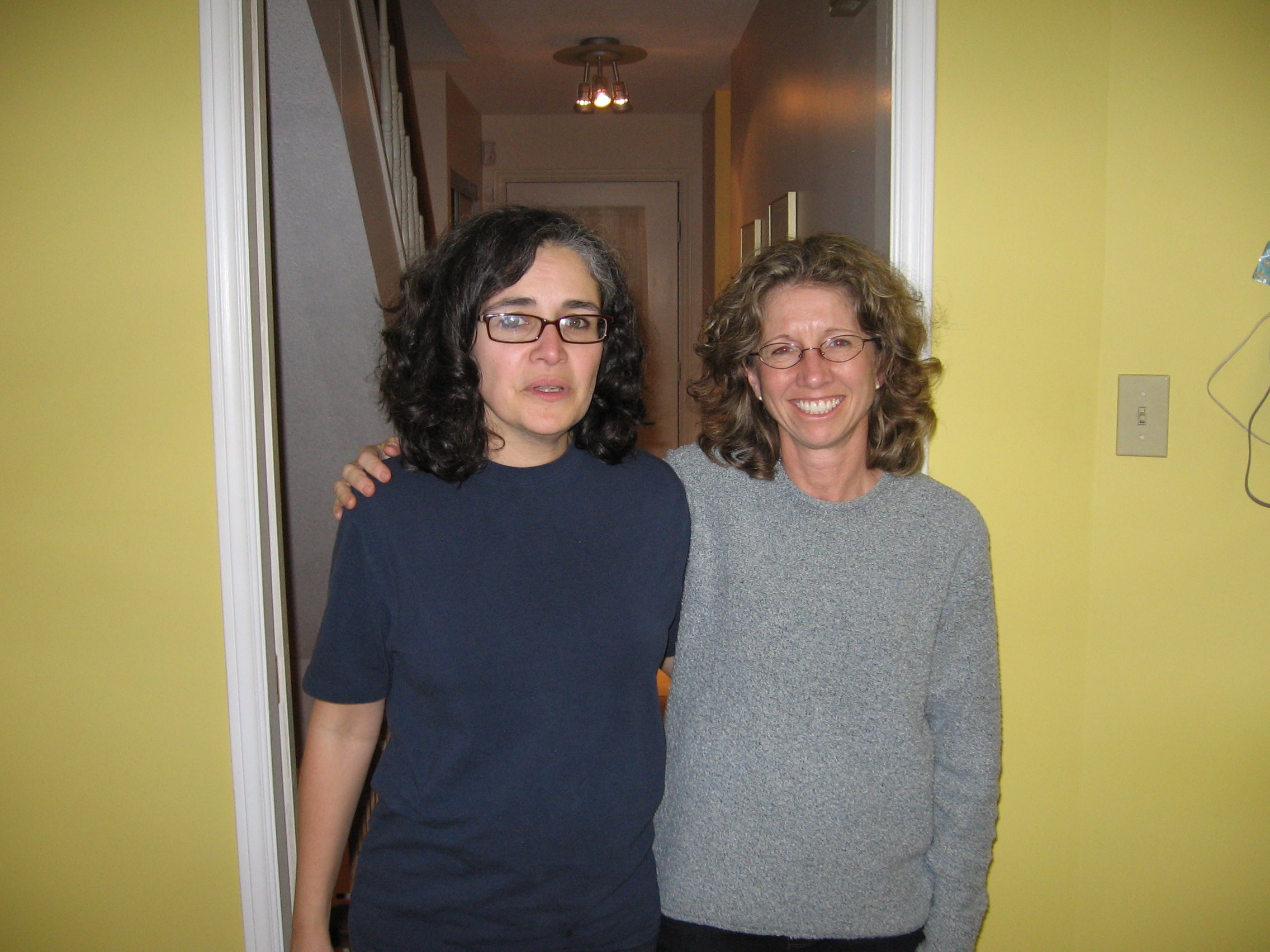
Members
Sylvia Boyd
Lucia Moura

Research Activities
Our research aims at the development of efficient computational
methods
for problems in the areas of combinatorial optimization, integer
programming
and combinatorial structures, their theory and applications.
Combinatorial optimization and integer programming deals
with many practically important optimization problems which are
combinatorial
in nature. Some examples of such problems include the design of
reliable
communication networks, fast printed circuit board production,
scheduling
problems and routing problems.
The study of combinatorial structures includes the arrangement
of discrete objects in a very balanced or tightly restricted way.
Combinatorial
structures like graphs and combinatorial designs model several problems
arising in information technology, including problems in communications
and security, software testing and bioinformatics.
Our research focuses towards the following aspects of integer
programming,
combinatorial optimization and combinatorial structures:
-
Travelling Salesman Problem
-
Combinatorial Designs and Hypergraphs
-
Design and Analysis of Algorithms
-
Polyhedral Combinatorics
-
Combinatorial Generation
-
Symmetry in Integer Programming
-
Network Design
-
Software Testing, Network Testing
Our members are also part of The
Ottawa-Carleton Discrete Mathematics Group,
where we collaborate and organize joint events.
Current Projects
-
Applying new parallel decomposition method within cutting plane
approach
to solve sub-tour elimination relaxation of the traveling salesman
problem.
-
Testing approximation algorithm for the Steiner tree problem.
-
New integrality gap results for small traveling salesman problems.
-
Solving symmetrical integer programming problems by branch-and-cut.
-
Covering arrays: construction methods and applications to network and
software
testing.
-
Isomorph-free exhaustive generation of combinatorial objects.
Research Facilities
The IPCOS lab is sharing a powerful computing infrastructure with the
Bioinformatics
Research Group (BORG) and Computational Laboratory in Coding and
Cryptography
(CLICC). It consists of:
-
a work-group server (SUN Fire V880) which is multi-user,
multi-processor
(8) server with large central memory (32 Gbytes), large disk capacity
(0.5
Tbytes) and high throughput disk access.
-
a work-group server (SUN Fire V480) 4-way 64 bit
microprocessor
used to execute CPU and memory intensive applications;
-
15+ workstations (15 SUN Blade workstations; IBM PC/Linux); and some
network
printers.
Using Sun Microsystems' GridEngine allows us to integrate
workstations
and servers together, and provide the researchers with an additional
15+
processors. Several commercial software packages are essential to
the success of these projects. These include ILOG Parallel CPLEX
library,
Magma computer algebra package, and several other open source software
for combinatorial algorithms research.